Label-Free Cell Analysis and Cell Sorting Technologies

Quantitative mechanical phenotyping of single cells — without labels or antibodies

Reveal intrinsic biomechanical properties and functional cellular states in heterogeneous populations — in real time and at statistically relevant scale.

Schematic of heterogeneous cells flowing through a microfluidic channel, passing a highlighted analysis region where individual cells are segmented and morphological parameters are extracted and assigned unique IDs.

Quantify mechanical and morphological phenotypes for every single cell — directly in flow.

Who uses this technology?

Imaging cytometry and real-time deformability cytometry are used by researchers who need high-throughput, label-free characterization of cells based on intrinsic physical phenotypes. It is suitable for:

  • Biomedical researchers studying cell mechanics, differentiation, or mechanotransduction

  • Immunologists interested in immune cell activation without markers

  • Cancer researchers exploring mechanical biomarkers of tumour progression

  • Stem cell biologists tracking mechanical maturation

  • Clinical researchers evaluating disease-associated biomechanical signatures

Our label-free imaging cytometry systems are commercially available and standardized for reliable use in research and translational laboratories worldwide.

Explore Products & Commercial Systems

Browse commercially available imaging cytometry systems for label-free mechanical cell analysis.

Technology Principle

Our systems quantify intrinsic mechanical properties of individual cells by combining controlled microfluidic deformation with high-speed imaging and real-time data analysis.

No labels. No external markers.
Only the cell’s physical response.

Microfluidic Deformation
Cells pass through a defined microchannel geometry where controlled hydrodynamic stress induces measurable deformation.

High-Speed Imaging
Each cell is captured optically at high frame rates, enabling precise shape and size analysis during deformation.

Real-Time Quantification
Mechanical parameters such as size, deformation, and inferred stiffness are extracted instantly for analysis or sorting.

Key Advantages

Intrinsic Phenotyping
Measure native mechanical properties without labeling, staining, or antibody-based bias.

Quantitative and Reproducible
Generate standardized, operator-independent parameters suitable for comparative studies.

High Throughput
Analyze thousands of cells per second for statistically robust datasets.

Workflow Compatibility
Integrates into established laboratory processes and enables downstream applications.

Real-Time Sorting
Isolate cells based on mechanical phenotype without fluorescent markers.

Installed in Leading Research Laboratories

Selected recent installation demonstrating real-world use of our imaging cytometry and label-free analysis systems in academic research.

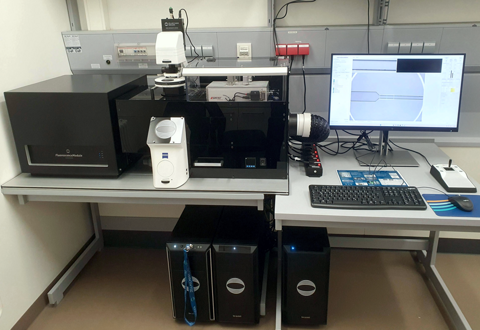
Real-time deformability cytometry system used for label-free cell analysis at Otto von Guericke University Magdeburg

Otto von Guericke University Magdeburg

Research Group Prof. Dr. Julian Thiele

Chair of Organic Chemistry focusing on soft and adaptive polymer materials for applications in cell biology, synthetic biology and biotechnology.

Faculty of Process and Systems Engineering

Institute of Chemistry

Featured Scientific Publications

Selected peer-reviewed studies that demonstrate real-world use and validation of imaging cytometry and label-free mechanical cell analysis methods.

eLife (2025)
De novo identification of universal cell mechanics gene signatures
Identified conserved gene signatures linked to mechanical cell phenotypes across diverse systems by combining high-throughput mechanical measurements with machine learning-driven transcriptomic analysis.

Nature Chemistry (2025)
Cytoskeleton-functionalized synthetic cells with life-like mechanical features and regulated membrane dynamicity
Demonstrated artificial cytoskeletons with life-like mechanical behaviour, quantified using real-time deformability cytometry to reveal how structural polymers impart measurable resilience in synthetic constructs.


Lab on a Chip (2024)

High-throughput viscoelastic characterization of cells in hyperbolic microchannels
Introduced hyperbolic microchannels enabling precise, high-throughput assessment of cell viscoelastic properties — revealing mechanical response patterns across cell types at speeds of up to ~100 cells per second.

Browse our carefully curated, filterable database of publications on our methods and technology.

Any question, suggestion or criticism?
©2026  ZELLMECHANIK DRESDEN